BLOG

A phone ring light can help with small product photos, short videos, and calls, but its diameter alone does not tell you whether it suits your work. Size, output, color control, diffusion, support stability, and the position relative to the subject all matter. A glossy package can reflect a bright circle directly into the image. Start with the subjects you actually photograph and verify the exact kit before ordering.
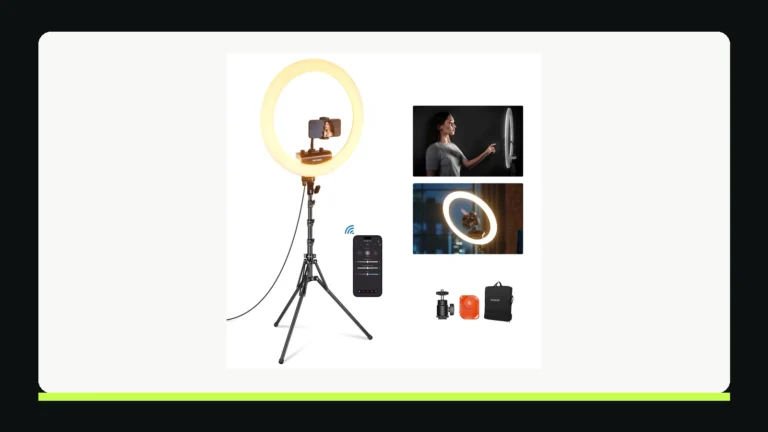
The Elgato Ring Light product information illustrates the kinds of controls a manufacturer may specify. Its features are not a specification for every inexpensive light sold under the same generic name. Compare the specific model, included mount, power supply, and support documentation for each listing.
Define the photo or video task
Write down who uses the light, where it will stand, how long a session lasts, and what else is on the table. A consultant speaking to camera, a store photographing jewelry, and a team filming reflective bottles have different lighting problems. List three real tasks and identify which one currently requires extra time, repeated shots, or a second person’s help.
Set a minimum outcome before looking at prices. For a catalog, that may mean readable labels and repeatable color across a product line. For a call, it may mean even facial illumination without glare in glasses. A ring light is one possible arrangement, not a guarantee that every photo will look professional.
Match the light’s size to the subject
A small ring is best evaluated at close working distances. A larger object may be unevenly lit if the light is too small or too far away. Measure the photographed area and the available distance between camera, object, and background. Check the light’s outer dimensions and the actual illuminated surface; two products described by similar diameters may not have the same usable shape.
If the phone sits in the center of the ring, verify that the mount holds its size and weight in both portrait and landscape orientation. The arrangement may be convenient for a talking-head video but can restrict camera angles for an object on a table. Consider whether the phone needs to move independently from the light.
Test distance, angle, and reflections
Move the light closer and farther to compare brightness, shadow shape, and reflected highlights. A shiny surface may show the ring itself. Tilting the object, changing camera position, or moving the light off-axis can sometimes help, but may also alter the catalog’s consistency. Test with both a matte item and the most reflective product you routinely sell.
One public photography discussion describes circular reflections interfering with a glossy book cover. That is an illustration of a possible reflection, not a measured result for every ring light. Glass, plastic sleeves, polished metal, and screens deserve a deliberate trial before adopting a single lighting setup for all products.
Compare diffusion and color control
A bare or poorly diffused light may create hard shadows and small bright spots. Check the diffuser in the exact product and whether a second soft source or a reflector can be placed on the other side. For product photographs, a pair of diffused side lights can sometimes produce a cleaner result than a frontal ring, especially on reflective packaging.
Look for documented brightness and color-temperature controls. Keep the setting consistent for a catalog series, and be aware that the phone camera’s automatic exposure and white balance can still change perceived color. When possible, lock those settings during a comparison. A claim that a light offers several “modes” tells you little about how repeatable the output is.
| Criterion | What to verify |
|---|---|
| Size | Subject area and working distance, not only phone size |
| Mount | Phone fit, portrait or landscape use, and stability |
| Light | Brightness control, diffusion, and color setting |
| Power | USB, adapter, or battery requirements at working brightness |
| Reflection | Appearance on glossy products and glasses |
Inspect the tripod and power path
A light and phone mounted high on a narrow tripod can become unstable when someone taps the screen. Check the stand’s base, maximum working height, mounting thread, and load instructions. Consider table space and the path of the cable. The power source may be a USB port, a dedicated adapter, or a battery; confirm what is included and what the highest usable brightness requires.
If recording away from the office, include transport and setup time in the decision. A ring that looks compact in an ad may require a separate stand or power bank. Do not assume any USB port supplies the necessary power. Read the exact model’s instructions before relying on a laptop port during a client session.
Build a repeatable small-product setup
For a small store, start with a simple background and mark the positions of light, camera, and product. Photograph one matte and one glossy object at several distances and brightness settings. Compare the images on a larger display, looking at shadows, color, label readability, and reflection. Record the setup that works so the next batch of catalog images is consistent.
If you must remove the ring reflection by moving the light so far that the subject becomes uneven, consider an alternative arrangement. A second diffused light or reflector may solve the problem with less editing. The outcome to seek is a repeatable product image, not proof that the new equipment was worth buying.
Check the listing and the first days of use
Compare seller, new or used condition, included stand and mount, return policy, and warranty. A category listing does not establish that a specific offer contains all the parts described here. Save the exact model and advertised contents. On receipt, assemble it with the phone used for work, photograph the same product at three settings, and check stability through a full session.
Use work-like material without exposing private client data. A short test establishes basic operation in that room; it does not prove lifespan or universal image quality. If something is missing, compare the delivered kit with the listing before changing the whole workflow. Keep a known backup lighting setup during the first week.
When another light or no purchase makes more sense
Postpone buying if brightness, power, or mount compatibility is unclear. If your main issue is a shiny product reflecting the light, a larger softbox or two side lights may fit the task better. If the camera exposure is inconsistent, fix that workflow before assuming a ring will solve it. Include stands and power accessories in total cost.
A phone ring light is a reasonable tool when its exact model fits the subject, space, camera position, and power setup. Judge it through controlled sample photos and repeatability, not a “professional” label or diameter alone.
Keep the sample images and the position notes for future sessions. If another person will shoot the next batch, a marked setup is more useful than a verbal reminder to “use the same lighting.” Repeatability can reduce inconsistent catalog images without requiring you to claim a particular sales improvement.